

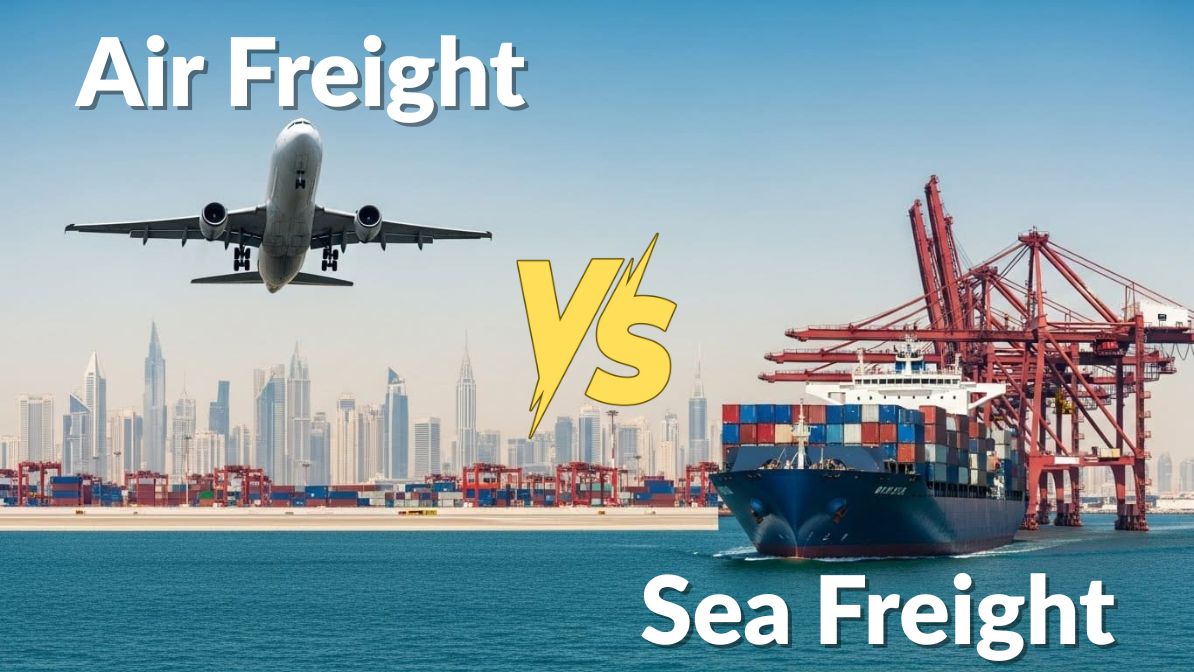
In the fast-paced world of international trade, getting your products from point A to point B efficiently and cost-effectively is paramount. For businesses operating out of the UAE, the choice often boils down to two primary modes of transport: air freight and sea freight. Each has its distinct advantages, and picking the right one can significantly impact your supply chain, bottom line, and customer satisfaction.
So, how do you decide? Let’s break down the key considerations to help you make an informed decision for your business cargo.
1. Speed: When Every Hour Counts
Air Freight: The Need for Speed

When time is of the essence, air freight is the undisputed champion. If you’re dealing with perishable goods, high-value electronics, or urgent components, air cargo offers the fastest transit times globally. Imagine getting a critical part from Dubai to Europe in a matter of days, not weeks. This speed allows you to react quickly to market demands or unexpected supply chain disruptions.
Sea Freight: The Patient Journey

Sea freight is the workhorse of international trade but moves at a much slower pace. Depending on the destination, a sea shipment can take anywhere from a few weeks to over a month. While it’s not built for urgency, it is perfect for goods with longer lead times and predictable demand.
- Choose Air Freight if: You have high-value, low-volume goods or time-critical deliveries.
- Choose Sea Freight if: Your inventory planning allows for a 30-45 day lead time.
2. Cost: Balancing Your Logistics Budget
Sea Freight: The Economical Giant
For most businesses shipping large volumes, sea freight is by far the most economical option. Shipping containers—whether Full Container Load (FCL) or Less than Container Load (LCL)—offer unparalleled cost efficiency per unit. If you’re importing bulk raw materials or heavy machinery, sea freight will drastically reduce your overhead.
Air Freight: The Premium Price Tag
The convenience of air freight comes with a higher price point. Costs are calculated based on both weight and “chargeable volume.” For heavy or bulky items, air freight can quickly become expensive, so it’s usually reserved for items where the profit margin justifies the shipping speed.
3. Capacity and Flexibility
One of sea freight’s biggest advantages is its immense capacity. Modern vessels can carry thousands of containers, making it the only viable choice for large project shipping and oversized cargo. Conversely, aircraft have strict weight and size limitations, which can be a hurdle for industrial-sized shipments.
4. Security and Reliability
Both methods are highly secure, but they offer different types of protection:
- Air Freight: Involves less handling and shorter transit times, reducing the window of risk for damage.
- Sea Freight: While very safe, it involves more handling at ports. This is where professional packaging services become vital to ensure your goods survive the ocean voyage.
5. Navigating the Paperwork
Regardless of the mode you choose, your cargo won’t move without the right documentation. In the UAE, specialized customs clearance is required to avoid costly port demurrages or airport storage fees. Partnering with a provider that understands local regulations is just as important as the shipping method itself.
The U.N. Cargo & Logistics Advantage: Tailored Solutions in the UAE
Choosing between air and sea freight isn’t always a “black and white” decision. Often, the best strategy involves a mix of both. At U.N. Cargo & Logistics, we specialize in providing tailored freight forwarding services that cater to the unique demands of businesses in Dubai and across the globe.
Whether you need the rapid reach of air freight, the cost-efficiency of sea freight, or reliable land freight across the GCC, our team is here to guide you.
Ready to optimize your shipping? Contact the logistics experts at U.N. Cargo & Logistics today for a customized quote that fits your business needs.